System 01 — Case Study
Support Engineering Simulation Platform
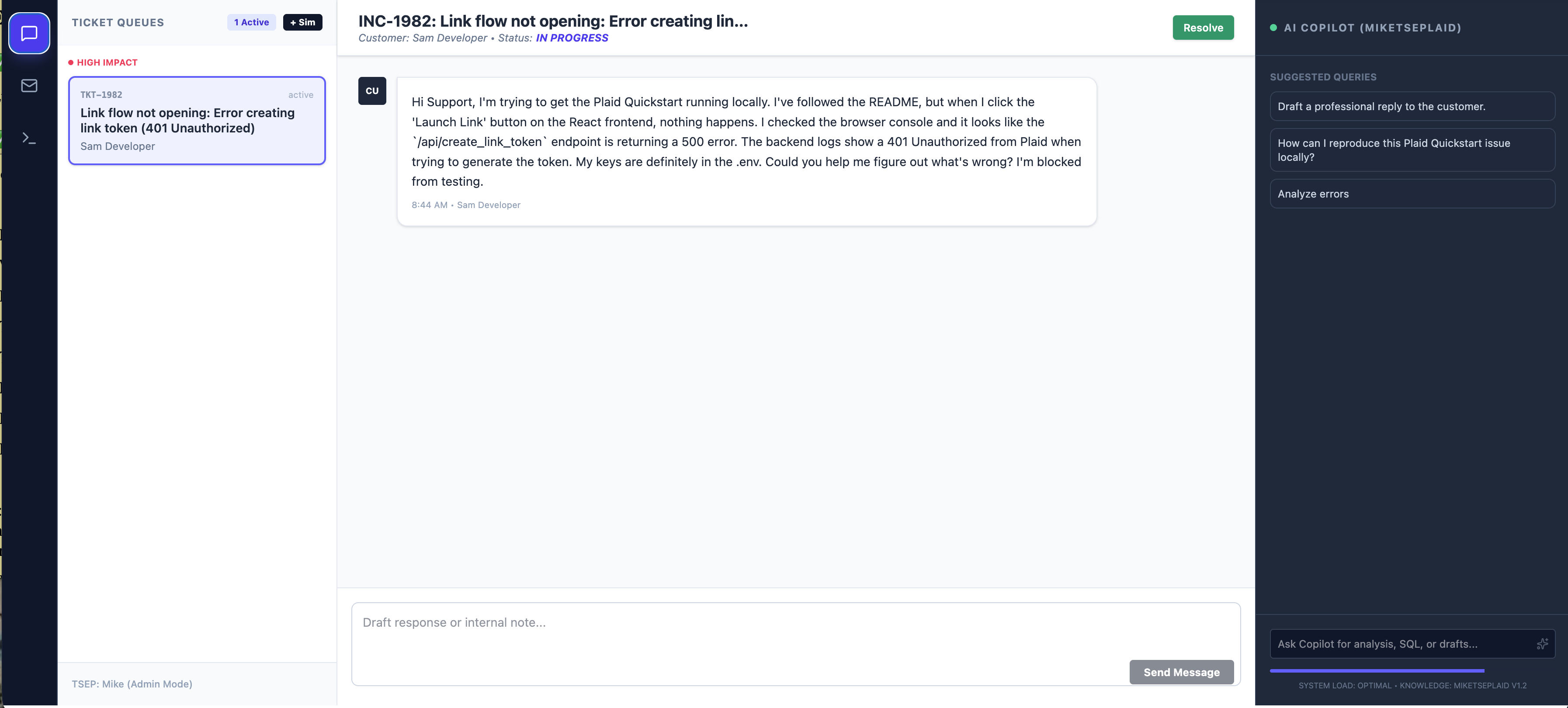
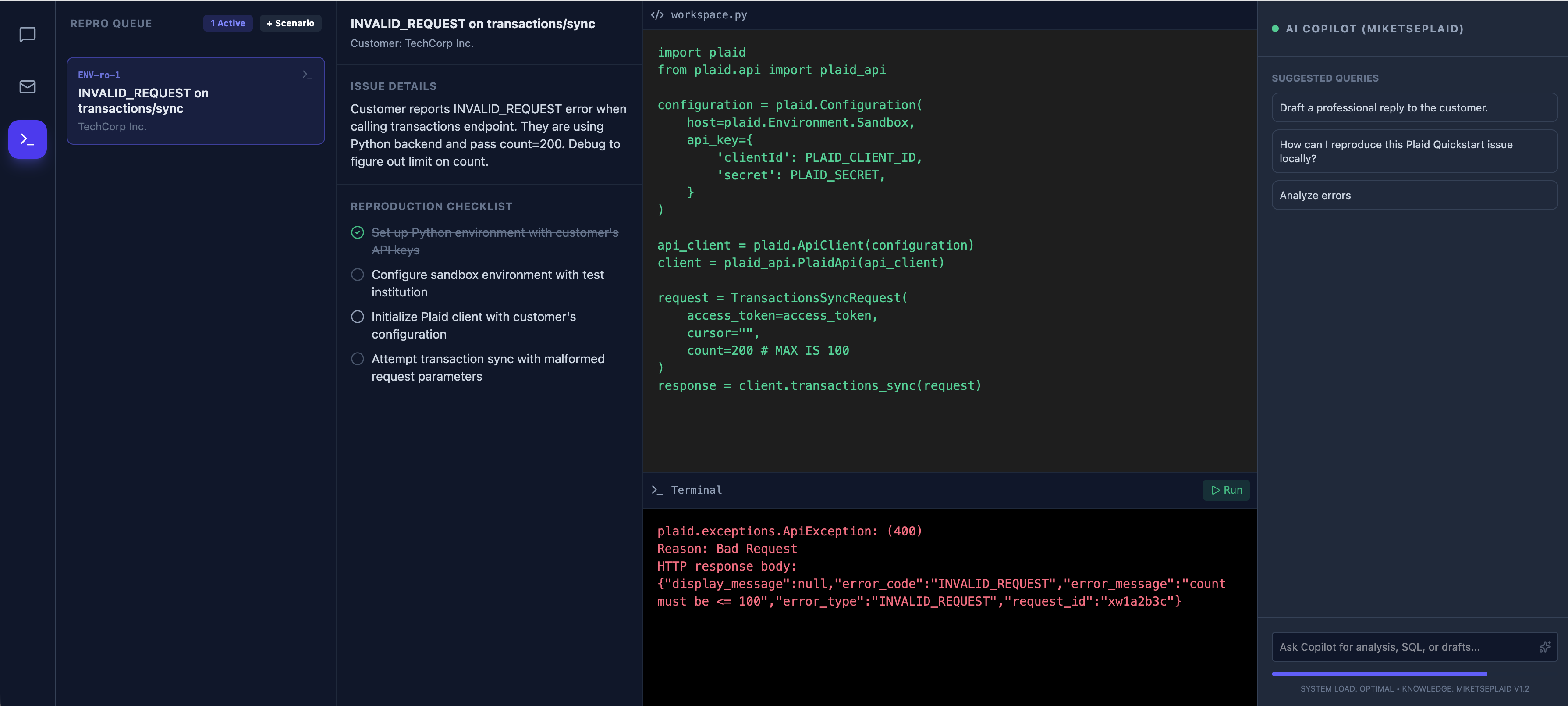
Simulated support environment where engineers handle tickets, reproduce issues, and learn faster.
Problem
Support engineers are expected to be sharp under pressure — diagnosing issues, navigating tools, communicating clearly — but there's rarely a safe place to build those reflexes before facing real customers. Training is usually shadowing plus hoping it sticks.
What I Built
A simulation platform that puts support engineers through realistic ticket scenarios end to end — presenting the problem, letting them work through diagnosis and response, and surfacing how they handled it. It recreates the real shape of support work in a controlled environment where mistakes are learning, not incidents.
Architecture / How It Works
Scenarios are structured to mirror genuine support situations, walking the user through the diagnostic and response flow step by step, with the system tracking the path taken and the outcome. Built to run as a standalone, interactive experience.
Outcome
A repeatable way to build and pressure-test support-engineering skill without customer risk — turning "learn on the job" into "practice first, then perform."
Tech Stack
Current Status
Working Prototype — Demo AvailableScreenshots